
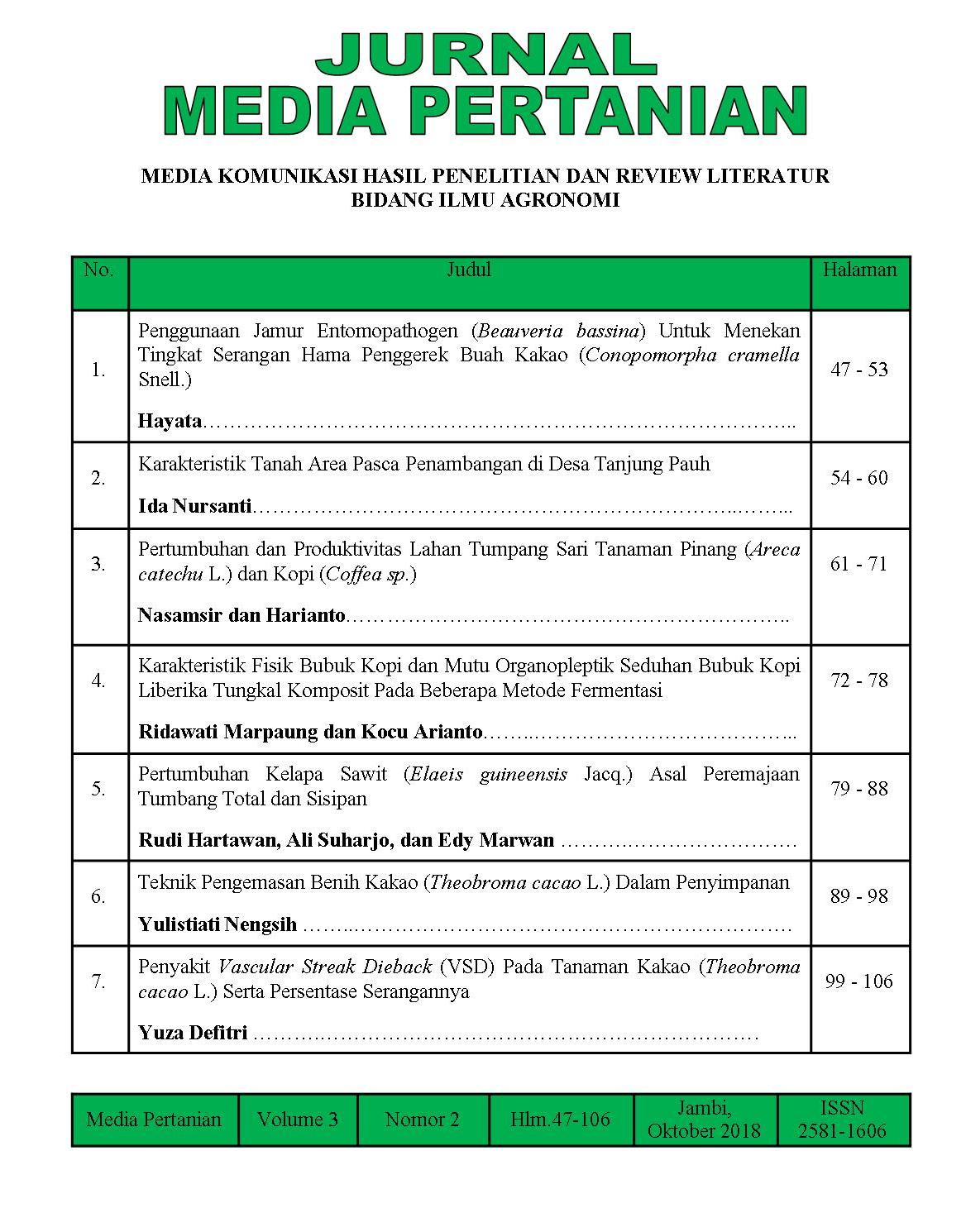

Pengaruh Pupuk Kascing sebagai Substitusi Pupuk NPK 16:16:16 terhadap Pertumbuhan dan Hasil Tanaman Kedelai (Glycine max L.)
Abstract
Keywords
Full Text:
PDFReferences
Afsyah S, H Walida, K Dorliana, Y Sepriani, & FS Harahap. (2021). Analisis Kualitas Kascing dari Campuran Kotoran Sapi, Pelepah Kelapa Sawit dan Limbah Sayuran. Jurnal Ilmu Pertanian, 6(1), 10–12.
Amandus, T Abdurrahman, & Radian. (2023). Pengaruh Pupuk Kandang Sapi dan NPK terhadap Pertumbuhan dan Hasil Kedelai pada Tanah Salin. Jurnal Pertanian Agros, 25(3), 2617–2625.
Anggraini UD, Islan, & Syafrinal. (2017). Respon Tanaman Kedelai (Glycine max L. Merril) terhadap Tinggi Muka Air Tanah dan Pemberian Dosis Pupuk Majemuk di Media Gambut. JOM Faperta, 4(2), 1–14.
Anjani BPT, BB Santoso, & Sumarjan. (2022). Pertumbuhan dan Hasil Sawi Pakcoy (Brassica rapa L.) Sistem Tanam Wadah pada Berbagai Dosis Pupuk Kascing. Jurnal Ilmiah Mahasiswa Agrokomplek, 1(1), 1–9.
Budiwan A, R Syahrial, & H Susanto. (2024). Pemanfaatan Kotoran Ayam sebagai Pupuk Kascing di Desa Jeruk Kecamatan Lakarsantri Surabaya. Lingkungan Hidup dan Bencana, 7, 1–9.
Cinta ST, Widiwurjani, & KN Augustien. (2023). Respon Pupuk N, P, K dan Pupuk Organik Cair pada Pertumbuhan dan Hasil Tanaman Kedelai (Glycine max (L.) Merril). Jurnal Agrium, 20(1), 42–50.
Dhani H, Wardati, & Rosmimi. (2014). Pengaruh Pupuk Vermikompos pada Tanah Inceptisol terhadap Pertumbuhan dan Hasil Sawi Hijau (Brassica juncea L). Jurnal Online Mahasiswa, 1(1), 1–11.
Direktorat Jenderal Tanaman Pangan. (2024). Kementrian Pertanian Direktorat Jenderal Tanaman Pangan.
Gunawan E, & E Sabli. (2023). Aplikasi Bokashi Batang Pisang dan NPK Mutiara 16:16:16 terhadap Pertumbuhan serta Produksi Tanaman Kedelai (Glycine max L.). Jurnal Agroteknologi Agribisnis dan Akuakultur, 3(2), 1–15.
Hartatik W, Husnain, & LR Widowati. (2015). Peranan Pupuk Organik dalam Peningkatan Produktivitas Tanah dan Tanaman. Jurnal Sumberdaya Lahan, 9(2), 107–120.
Herdiyantoro D, & A Setiawan. (2015). Upaya Peningkatan Kualitas Tanah Melalui Sosialisasi Pupuk Hayati, Pupuk Organik, dan Olah Tanah Konservasi di Desa Sukamanah dan Desa Nanggerang Kecamatan Cigalontang Kabupaten Tasikmalaya. Jurnal Aplikasi Ipteks Untuk Masyarakat, 4(1), 47–53.
Idwar, Nelvia, Irfandri, N Lubis, & S Veronica. (2025). Analisis Sifat Kimia Ultisol setelah Pemberian Kompos Solid dan Fly Ash Batubara. Jurnal Ilmu Tanah dan Lingkungan, 27(1), 1–6.
Laili, M. (2022). Pemanfaatan Pupuk Organik dan Pupuk Anorganik terhadap Pertumbuhan dan Hasil Tanaman Kedelai (Glycine max). Agrosasepa: Jurnal Ilmu Pertanian, 1(1), 16-20.
Lubis FA, K Rizal, Y Sepriani, & FS Harahap. (2023). Karakteristik Sifat Kimia Tanah Ultisol yang ditanami Semangka (Citrullus lanatus) di Desa Gunung Selamat Kecamatan Bilah Hulu Kabupaten Labuhaan Batu. Jurnal Pertanian Agros, 25(3), 2698–2704.
Mamang KI, I Umarie, & H Hasbi. (2017). Pengaplikasian Berbagai Macam Pupuk Azolla (Azolla microphyla) dan Interval Waktu Aplikasi terhadap Pertumbuhan dan Produksi Kedelai (Glycine max (L) Merill). Jurnal Agritop, 15(1), 25–43.
Mayani N, Jumini, & MD Alvin. (2021). Respon Pertumbuhan dan Hasil Tanaman Kedelai (Glycine max L. Merrill) pada Berbagai Dosis Pupuk Vermikompos dan Jarak Tanam. Jurnal Agrium, 18(2), 88–94.
Octavia HS, & K Hariyono. (2018). Pendugaan Komponen Generatif dan Kandungan Protein pada Lima Varietas Kedelai (Glycine max (L.) Merril). Berkala Ilmiah Pertanian, 5(4), 250–255.
Oka AA. (2007). Pengaruh Pemberian Pupuk Kascing terhadap Pertumbuhan Tanaman Kangkung Darat (Ipomea reptans Poir). J. Sains MIPA, 13(1), 26 28.
Rajmi SL, Margarettha, & Refliaty. (2018). Peningkatan Ketersediaan P Ultisol dengan Pemberian Fungi Mikoriza Arbuskular. J. Agroecotania, 1(2), 42–48.
Reski S, R Susana, & TH Ramadhan. (2024). Pengaruh Pupuk Vermikompos dan NPK terhadap Pertumbuhan dan Hasil Kedelai Edamame pada Tanah Podsolik Merah Kuning. Perkebunan dan Lahan Tropika, 14(2), 106–115.
Sa’diyah N, CR Siagian, & M Barmawi. (2011). Korelasi dan Analisis Lintas Karakter Agronomi Kedelai (Glycine max L. Merrill) Keturunan Persilangan Wilis X MLG 2521. Jurnal Penelitian Pertanian Terapan Vol., 16(1), 45–53.
Sanda N, & N Syam. (2018). Efektivitas Penggunaan Pupuk Organik Kascing dan Pupuk Organik Cair pada Pertumbuhan dan Produksi Tanaman Tomat (Lycopersicum esculantum Mill). Jurnal Agrotek, 2(1), 16–27.
Saputra RR, S Purwanti, & R Rogomulyo. (2012). Pengaruh Takaran Pupuk Kascing terhadap Pertumbuhan dan Hasil Dua Varietas Kedelai (Glycine max (L.) Merrill). Vegetalika, 1(1), 83–96.
Sidik I, H Syaf, S Leomo, T Hemon, S Alam, & Lo Rustam. (2024). Pengaruh Aplikasi Pupuk Kascing terhadap Beberapa Sifat Fisika Tanah Inceptisol dan Pertumbuhan Tanaman Rambutan. Jurnal Agroteknologi, 3(1), 73–80.
Sinuraya R, J Soesatrijo, & Yuliyanto. (2023). Pemanfaatan Pupuk Kascing dengan Arang Serbuk Gergaji sebagai Media Tanam Bibit Kelapa Sawit (Elaeis guineensis Jacq.) di Pembibitan Kelapa Sawit. Jurnal Berkala Penelitian Agronomi, 11(1), 46–56.
Sirait EE, Nelvia, & H Fauzana. (2020). Pertumbuhan dan Hasil Tanaman Kedelai (Glycine max L.) terhadap Pemberian Vermikompos dan Biochar di Tanah Ultisol. Jurnal Solum, 27(2), 29–41.
Soverda N, Evita, & M Megawati. (2021). Pengaruh Clibadium Surinamense dan Rhizobium terhadap Pertumbuhan dan Produksi Kedelai Edamame. Jurnal Ilmiah Ilmu Terapan Universitas Jambi, 5(2), 180–192.
Trirahmah Z, F Podesta, & U Yasin. (2020). Pengaruh Tanah Bekas Macam Macam Bioaktivator dan Mikoriza serta Kombinasi Pupuk Anorganik terhadap Pertumbuhan dan Hasil Tanaman Kedelai (Glycine max L. Merril). Jurnal Agriculture, 14(2), 1–19.
Yanto FF., S Zahrah, & S Mulyani. (2023). Pengaruh Aplikasi Pupuk Hayati Petrobio dan Pupuk NPK Mutiara 16:16:16 terhadap Pertumbuhan dan Produksi Kedelai (Glycine max L.). Dinamika Pertanian, 39(1), 11–20.
Yosefa N, Armaini, Nurbaiti, & EN Daeli. (2022). Peningkatan Pertumbuhan dan Produksi Kedelai (Glycine max L) terhadap Aplikasi Pupuk Kascing dan NPK pada Tanah Inceptisol. Agroekoteknologi Tropika, 11(2), 74–85.
Yudiono K. (2020). Peningkatan Daya Saing Kedelai Lokal terhadap Kedelai Impor sebagai Bahan Baku Tempe Melalui Pemetaan Fisiko-Kimia. Agrointek, 14(1), 57–66.
Zebua T, SM Gulo, & SS Gulo. (2025). Pengaruh Pupuk Organik terhadap Pertumbuhan Tanaman dan Kualitas Tanah. Jurnal Kajian Ilmu Pertanian dan Perkebunan, 2(1), 208–213.
DOI: http://dx.doi.org/10.33087/jagro.v11i2.336
Refbacks
- There are currently no refbacks.

This work is licensed under a Creative Commons Attribution-ShareAlike 4.0 International License.
Jurnal Media Pertanian Published by Fakultas Pertanian Universitas Batanghari |
